
Things to Do in Paje, Zanzibar: Kitesurfing, Tides and Day Trips
Updated November 17, 2026 · Zanzibar Ibrahim Tours
Photo: Raissa Lara Lütolf / Unsplash
The best things to do in Paje are kitesurfing on its shallow lagoon, swimming and paddling at high tide, walking the flats at low tide, visiting a seaweed farm, and day trips to Jozani Forest, The Rock and Kizimkazi. Paje is the liveliest village on Zanzibar's south-east coast, so evenings are sociable too.
Paje at a glance
- Where: the south-east coast of Unguja, between Bwejuu to the north and Jambiani to the south.
- Known for: Zanzibar's main kitesurfing beach, with a reef around 1 to 1.5 km offshore and a flat, sandy lagoon inside it.
- Wind seasons: the stronger south-east kusi from about mid-June to mid-October, and the lighter north-east kaskazi from about late December to mid-March.
- Tides: large and twice daily. The lagoon fills and drains, and the beach changes hour by hour.
- Drive time: the airport is about 50 km away, roughly 60 to 90 minutes by road; Stone Town is around an hour.
Kitesurfing in Paje: why it works
The reef breaks the ocean swell, so the lagoon behind it stays flat. The bottom is soft sand, the water is waist-deep or less for much of the tide, and it stays warm all year, roughly 24 to 28°C. The trade winds blow side-shore to side-onshore, which pushes you back towards the beach rather than out to sea. That combination makes Paje a forgiving place to learn.
The lagoon is split by bands of seaweed farms. Kite schools talk about an inner lagoon close to the beach and an outer lagoon and sandbanks further out. When the tide drops, the inner lagoon empties and riders move out to the deeper water.
Kitesurfing seasons: kusi and kaskazi
- Kusi (south-east), about mid-June to mid-October: the stronger season. Schools quote averages from the mid-teens to around 20 knots, sometimes more, and the wind often builds through the afternoon. July and August are often described as the most reliable months.
- Kaskazi (north-east), about late December to mid-March: lighter and warmer, typically in the low to high teens of knots. Good for learning and for bigger kites.
- Between seasons: the long rains (roughly mid-March to May) and short rains (around November) bring patchy wind. You may get good days, but do not book a kite-only trip for April or November.
Averages are only averages. Before you book flights around the wind, ask a school for its records for your exact weeks, and build in a few spare days.
How the tide shapes your kite day
Around Zanzibar the spring tidal range is more than three metres, and at Paje that is the difference between a knee-deep pool and a sandbank you can walk across.
- Spring tides come around full and new moon. The lows are lowest, the water moves fastest, and for a while the lagoon can drain almost to the reef.
- Neap tides fall in the weeks between. The water barely leaves, and you get long flat-water windows in front of the beach.
- Mid tide is the classic beginner window: knee to waist deep, flat and sandy, so you can stand up every time you fall.
- Near high water the lagoon is deeper and choppier, with small kickers that freestylers and wing foilers enjoy.
- The reef waves work from roughly half tide on the rise. They are for experienced riders only, in groups or with an instructor.
One school notes that the inner lagoon runs about an hour behind the open-sea tide table, so a standard tide chart is a guide rather than the final word. For how tide tables work across the island, see our Zanzibar tides guide.
Learning to kitesurf in Paje
Several schools in Paje are certified by the IKO (International Kiteboarding Organization), and good schools schedule lessons around the tide. One long-established school recommends at least 6 hours of private lessons or 9 hours of semi-private lessons to reach independence. Some people ride after three days; others need a week.
- Lesson gear is included, so you do not need to bring anything except swimwear and a long-sleeved lycra for the sun.
- A thin neoprene top helps on breezy kusi afternoons if you feel the cold.
- Ask a school about instructor certification, rescue boat cover, radio helmets and what happens if the wind drops on your lesson day.
- Once you can ride, schools offer wing foiling, hydrofoil, strapless riding and downwinders along the coast.
Kite safety and local etiquette
- Wear booties or reef shoes. Sea urchins live on the flats, and coral fragments are sharp.
- Seaweed farms are someone's income. Cross them only at mid to high tide, carefully, and never drag a kite or board through the lines.
- Launch and land in the kite areas, well away from swimmers, and give way to fishermen and seaweed farmers on foot.
- Jambiani to the south has similar wind but more rocks and coral at low tide. Bwejuu to the north has more seaweed farms and works only above half tide.
Other things to do in Paje
Swim, paddle and snorkel at high tide
When the lagoon is full, Paje is lovely for swimming and stand-up paddling, usually best in the morning before the wind picks up. Snorkelling and dive trips go out to the reef when the tide allows.
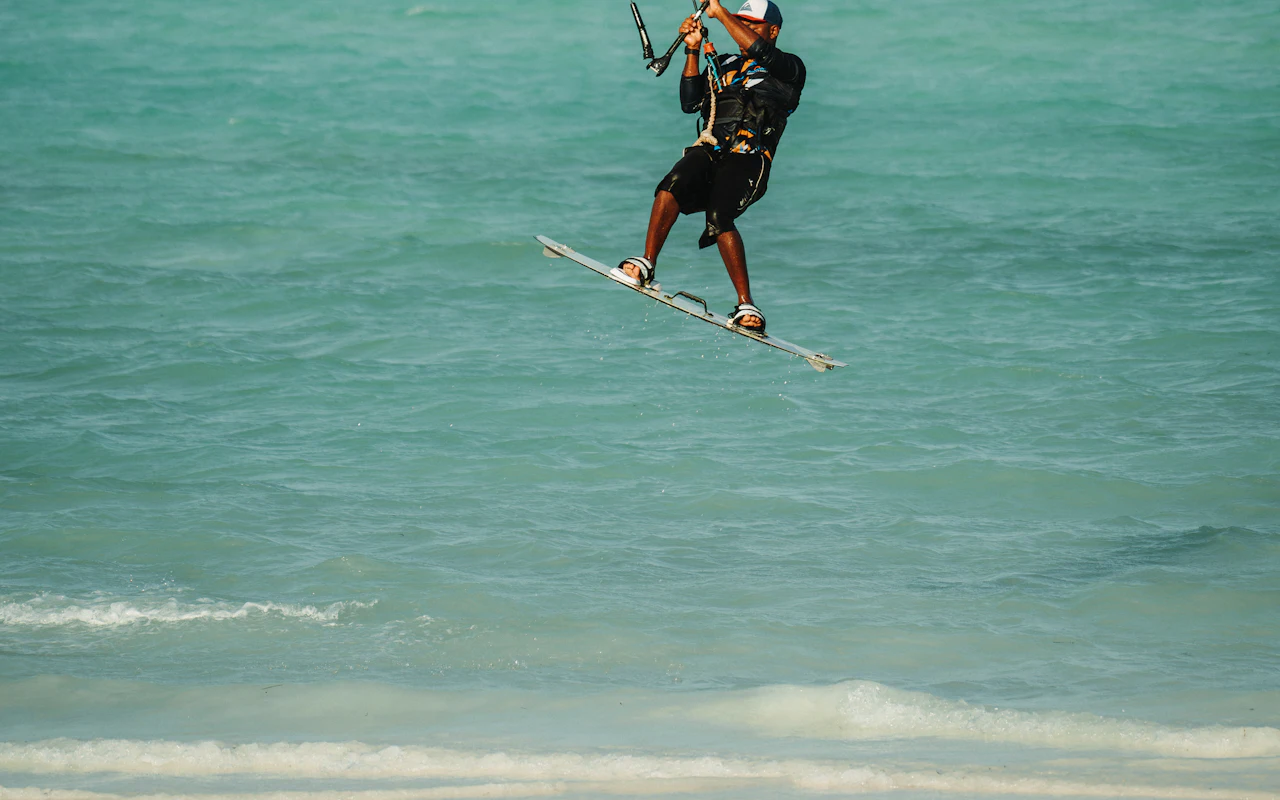
Photo: Jules Bassoleil / Unsplash
Walk the flats at low tide
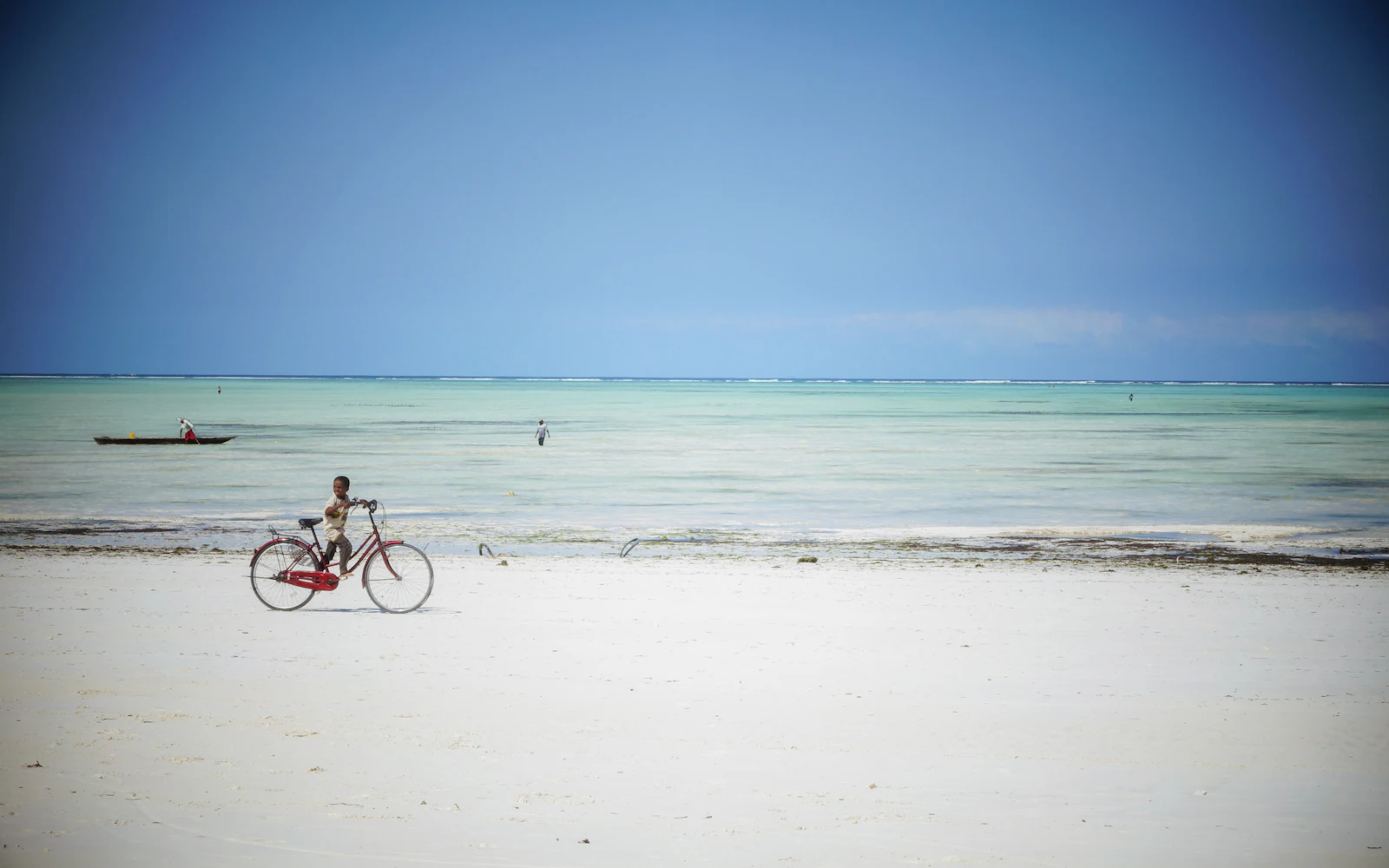
At low water you can walk far out across the sand and seagrass, past women tending seaweed and fishermen checking traps. Go early or late in the day; midday on the flats is hot and very bright.
Visit a seaweed farm
Mwani Zanzibar, a seaweed skincare business in Paje village that works with a collective of local women, runs tours of its seaweed farm and factory. You see the harvest timed to the falling tide and how the seaweed becomes soaps and oils. Book directly with them.
Swim in Maalum Cave
On the outskirts of Paje, Maalum is a natural cave with a deep, clear pool, a cool break from the beach in the heat of the day. Our Maalum Cave trip includes transport and a guide.
Paje nightlife
Paje is the most sociable spot on the south-east coast, but its nightlife is barefoot rather than clubby: beach bars, hostel bars and a few venues that run DJ nights and party evenings on set days of the week. Which venue hosts which night changes by season, so ask at your hotel or check the bars' social media when you arrive.
Use a taxi or walk in a group after dark, keep your drink with you, and carry only the cash you need.
Things to do near Paje
- Jozani Forest and the Blue Lagoon: see red colobus monkeys in Zanzibar's national park, around 20 to 30 minutes away, then snorkel near Michamvi Pingwe on our Blue Lagoon snorkelling and Jozani Forest tour.
- The Rock: the restaurant on a rock off Michamvi Pingwe is a short drive north. Read our guide to The Rock restaurant before booking, because the tide decides if you walk across the sand or take a boat.
- Kizimkazi dolphins: an early-morning trip from the south coast, around 45 minutes away. See our Kizimkazi dolphin tour.
- Jambiani and Kuza Cave: a quieter village 10 minutes south, with a fresh-water cave pool. See our Jambiani guide.
- Stone Town: about an hour away and worth a full day with a guide.
Who Paje suits (and who it doesn't)
Paje is ideal for kitesurfers, active travellers, solo travellers and anyone who likes cafés and company in the evening. It also suits budget travellers, with plenty of hostels and guesthouses.
It is not ideal if you want to swim at any hour, because the tide decides that, or if you want silence: in kite season the beach is busy with wings and kites. Our Nungwi vs Paje comparison helps if you are torn between coasts.
Getting there, staying and eating in Paje
The road from the airport and Stone Town crosses the island past Jozani Forest; allow roughly an hour, more at busy times. Public dala dalas also run from Stone Town to the south-east villages if you travel light.
The central part of the beach, near the kite schools, is the busiest. Stay towards the Bwejuu or Jambiani ends for more peace. Food ranges from beach cafés and smoothie bars to local places on the main road serving chips mayai, grilled fish and pilau. See where to stay in Zanzibar for the questions to ask before you book.
Local tips for Paje
- Get the day's tide from your kite school or hotel each evening and plan your swim, walk and session around it.
- Book kite lessons ahead for July, August and January, when schools are busiest.
- Swim and paddle in the morning in kusi season; the wind usually builds after lunch.
- Wear a long-sleeved lycra and reapply sun cream; the lagoon reflects a lot of sun.
- Cover shoulders and knees when you walk into the village away from the beach.
- Ask before photographing seaweed farmers and fishermen.
Plan it with Zanzibar Ibrahim Tours
We pick up from Paje hotels for Jozani, the Blue Lagoon, Kizimkazi, Maalum Cave and Stone Town, and we plan each trip around the tide and your kite sessions. Message us on WhatsApp (+255 675 366 829) or use our contact page. You can check current prices on each tour page, such as the Blue Lagoon and Jozani Forest tour.
Sources
- UK FCDO: Tanzania travel advice, safety and security
- Shaghude et al., Western Indian Ocean Journal of Marine Science (2002): tides around Zanzibar
- Kite Centre Zanzibar: kitesurfing in Zanzibar
- Kite Centre Zanzibar: Paje tide times
- Kite Centre Zanzibar: spot conditions
- IKSURFMAG: Paje kitesurfing travel guide
- National Geographic: the women transforming Zanzibar's seaweed industry
FAQs
When is the kitesurfing season in Paje?
There are two: the stronger south-east kusi from about mid-June to mid-October, and the lighter north-east kaskazi from about late December to mid-March. April, May and November are the least reliable months.
Is Paje good for beginner kitesurfers?
Yes. The reef keeps the lagoon flat, the bottom is sandy and much of it is waist-deep or less, and the wind blows side-shore. Lessons are timed to mid tide, when conditions are easiest.
What is the best tide for kitesurfing in Paje?
Mid tide suits beginners; high water gives deeper, choppier water for jumping and wing foiling. On big spring tides the lagoon can drain for a while, so riders move to the outer lagoon or wait for the water to return.
How many lessons does it take to learn kitesurfing in Paje?
One IKO school recommends at least 6 hours of private or 9 hours of semi-private lessons to reach independence. Some people ride after three days and others need a week.
Can you swim in Paje?
Yes, around high tide, when the lagoon fills up to the beach. At low tide the water is far out and very shallow. Keep clear of kite launch areas when you swim.
Is there nightlife in Paje?
Yes, it is the liveliest village on the south-east coast, with beach bars and weekly DJ or party nights at a few venues. The schedule changes by season, so check locally.
How far is Paje from Stone Town and the airport?
The airport is about 50 km away, roughly 60 to 90 minutes by road, and Stone Town is around an hour.
What is there to do near Paje?
Jozani Forest, the Blue Lagoon at Michamvi Pingwe, The Rock restaurant, Maalum Cave, Jambiani's Kuza Cave and the dolphins at Kizimkazi are all within an hour.