
Zanzibar Tides Explained: Tide Times, Beaches and Excursions
Updated November 17, 2026 · Zanzibar Ibrahim Tours
Photo: Bente Hagens / Unsplash
Zanzibar tides follow a semi-diurnal pattern: two high tides and two low tides in every lunar day of about 24 hours and 50 minutes, so each tide arrives roughly 50 minutes later than the day before. The effect is strongest on the east coast, where low tide drains wide sand flats, and weakest around Nungwi and Kendwa in the north.
Zanzibar tides at a glance
- Pattern: semi-diurnal, with high tides roughly 12 hours 25 minutes apart.
- Daily shift: tide times move later by around 50 minutes a day on average.
- Spring tides: around new and full moon, with the highest highs and the lowest lows.
- Neap tides: around the first and last quarter moons, with a much smaller range.
- Range: a study from the University of Dar es Salaam's Institute of Marine Sciences gives about 3.2 metres at spring tides and about 0.9 metres at neaps.
- Most affected: the east coast, including Paje, Jambiani, Bwejuu, Michamvi, Matemwe and Chwaka Bay.
- Least affected: Kendwa and the west-facing side of Nungwi, where you can swim at most states of the tide.
How Zanzibar tides work
Zanzibar's tides are driven mainly by the moon. The island gets two high tides and two low tides each lunar day, and because a lunar day lasts about 24 hours and 50 minutes, tomorrow's low tide comes later than today's.
The two highs of a day are not always equal. On most tide tables you will see one high noticeably taller than the other. Research on Zanzibar's sea level also notes that the range shifts through the year, so two full moons a few months apart do not produce identical tides.
Tide predictions labelled "Zanzibar" are calculated for one point, near Stone Town on the west coast. The pattern on the east coast is the same, but the exact times and heights differ a little, so treat any table as a guide rather than a timetable.
Spring and neap tides: why the moon phase matters
Twice a month, around new moon and full moon, the sun and moon line up and their pull combines. These are spring tides, a name that has nothing to do with the season. The sea rises highest and falls lowest, so east-coast lagoons empty furthest at low water and fill right up the beach at high water.
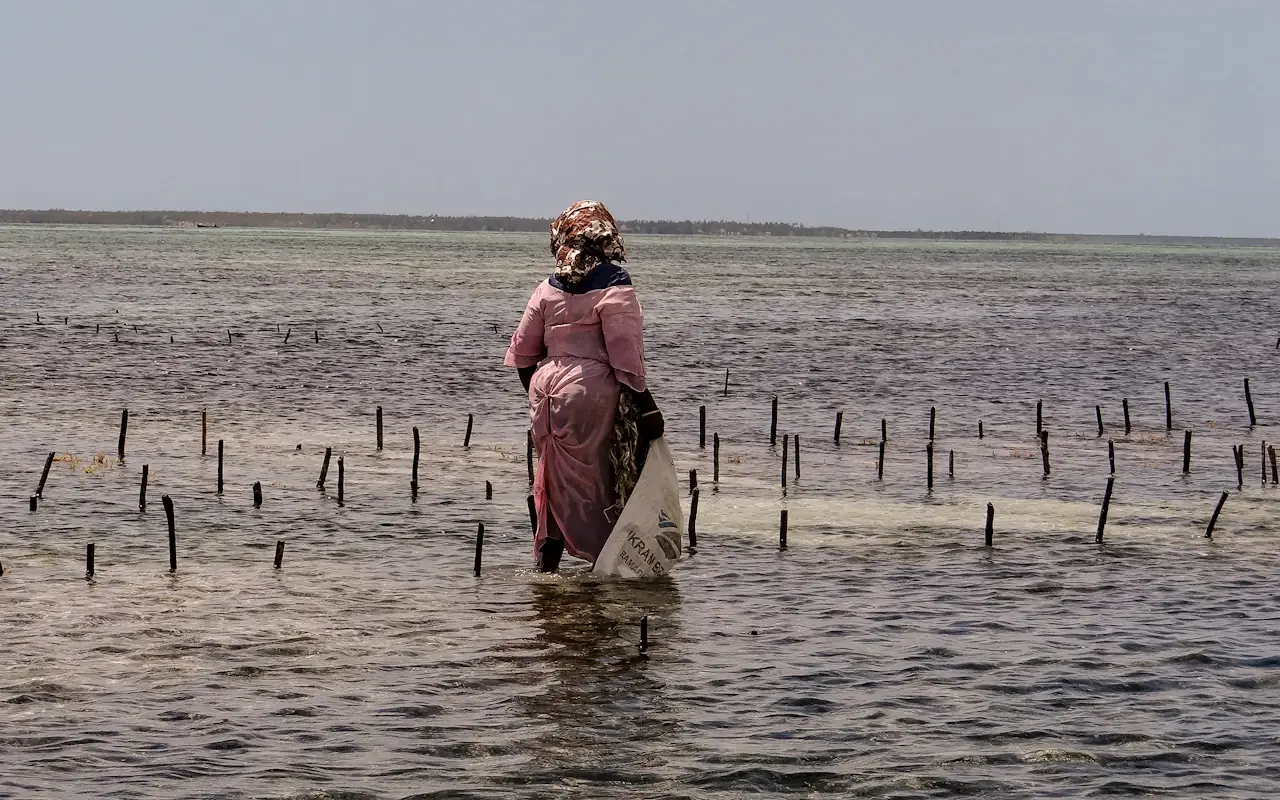
Photo: Lidia Stawinska / Unsplash
Around the first and last quarter moons, the sun and moon pull at right angles. These neap tides have a much smaller range: the sea never goes as far out and never comes as far in.
There is a useful local pattern too. In the tide tables for November and December 2026, the lowest spring lows fell in the late morning, roughly between 9am and noon, with a second low in the late evening. At neaps, the lows moved to early morning and late afternoon and were far shallower. In practice, east-coast lagoons are often at their emptiest around lunchtime in the days around full and new moon.
What the numbers mean
The Institute of Marine Sciences study puts the typical spring range around the island at about 3.2 metres and the neap range at about 0.9 metres. Daily predictions at the biggest spring tides can exceed that, so always check the table for your own dates rather than relying on an average.
Why the east coast has such wide low-tide flats
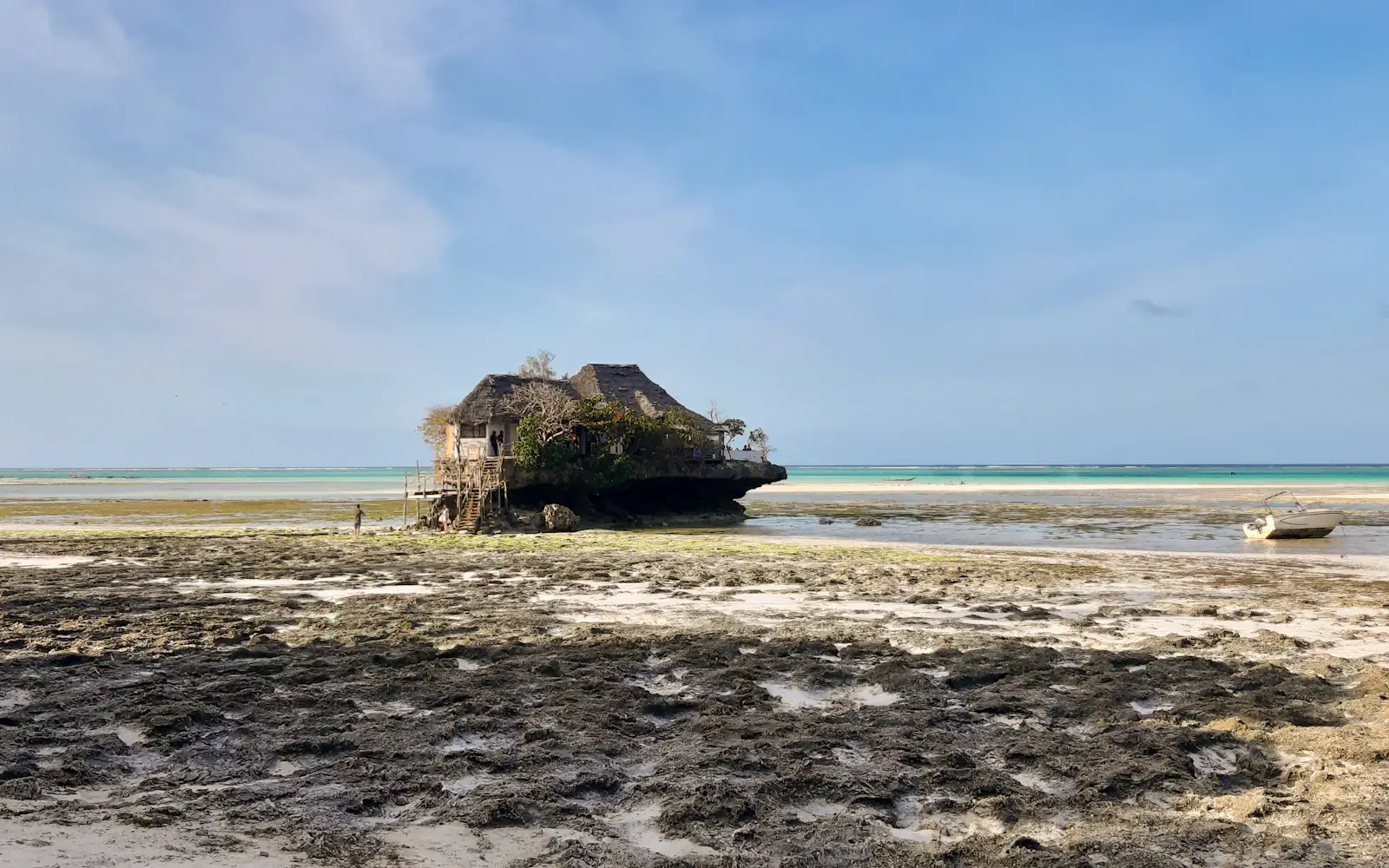
Along the east coast, a coral reef runs parallel to the shore some way out, with a broad, shallow lagoon between the reef and the beach. At high tide the lagoon fills and you can swim straight off the sand. As the tide drops, the water drains towards the reef edge and leaves sand, seagrass, rock pools and seaweed farms exposed.
This is what you see at Paje, Jambiani, Bwejuu, Michamvi and Matemwe. At big spring lows the water can retreat hundreds of metres, and further still in shallow Chwaka Bay. It is a different kind of beach day rather than a ruined one: low tide is the time for reef walks, rock-pooling and watching the seaweed farmers at work.
The north is different. Around Nungwi and Kendwa the beach shelves more steeply into deeper water, without a wide lagoon in front. The tide still rises and falls, and the beach narrows at high water, but you can usually swim at any time of day.
Beaches least affected by tides
- Kendwa: the most dependable swimming beach on the island at any state of the tide.
- Nungwi: the west-facing side swims well at most tides. Round the tip towards the east, the beach becomes more tidal.
- East-coast hotels with a pool: if you want the east-coast atmosphere, a pool means you can still swim when the lagoon is empty.
For a coast-by-coast comparison, see our guide to the best beaches in Zanzibar. Many travellers split their stay: a few nights in the north for easy swimming and a few on the east coast for the lagoon and the quiet.
How to read a Zanzibar tide table
- Use a reputable source. Tide-Forecast, Windfinder and Tidetime all publish free predictions for Zanzibar. They are estimates and are not for navigation.
- Check the time zone. Zanzibar uses East Africa Time (UTC+3), and good tables show times in local time.
- Read the height column. Heights are measured above a low reference level. The smaller the low-tide figure, the further the sea will go out; a low close to zero is a big spring low.
- Look at the moon phase. Most tables show it. Full or new moon means big swings; quarter moons mean gentler ones.
- Plan around high water. On the east coast, our guides plan swimming for the two or three hours either side of high tide, and walks or land trips around low tide.
- Allow for the daily shift. If you are planning several days ahead, remember each tide comes later each day.
Many hotels also keep the week's tide times at reception, and your guide will always check the tide before a boat trip.
How tides affect excursions
Most boat trips in Zanzibar are timed around the tide, which is why the start time of the same tour can change from one day to the next.
- Sandbanks: sandbanks such as Nakupenda appear as the tide drops and shrink or vanish as it rises. On our Nakupenda sandbank tour we time departures so there is beach to stand on when you arrive. Safari Blue days in Menai Bay are planned the same way.
- The Rock Restaurant: you walk out at low tide and take the boat at high tide. Our guide to The Rock explains how to choose a sitting.
- Snorkelling: shallow reefs such as Blue Lagoon at Michamvi need enough water over the coral. Too low and you risk scraping the reef, so we schedule these trips around mid to high tide.
- Mnemba: trips to Mnemba Atoll often leave from Matemwe beach, where at low tide you may have to wade out to the boat. Departure times move with the tide. See our Mnemba Island tour for details.
- Low-tide days: when the lagoon is empty, it is a good moment for land trips such as Jozani Forest, a spice farm or a day in Stone Town.
Zanzibar seaweed: farms and seaweed on the beach
Seaweed farming
The rows of sticks and lines you see in east-coast lagoons are seaweed farms. Seaweed farming arrived in Zanzibar in the 1980s and is still an important income in villages such as Paje and Jambiani. Most of the farmers are women, and their working day follows the tide: out at the farms when the water is low, home again when it comes in.
Warmer seas have made farming in the shallow lagoons harder in recent years, with disease and heat damaging crops. Some villages now turn part of the harvest into soaps and oils, which make good souvenirs.
If you walk the flats, keep to the sand between the farm lines, do not step on the crops and ask before photographing the farmers.
Is there a seaweed season?
Loose seaweed washing onto the beach is a separate thing from the farms. It comes and goes with wind, swell and the big spring tides, and there is no reliable month-by-month calendar for it. Some travel guides name December to February as heavier on beaches such as Paje; in reality it can change from one week to the next.
Most beachfront hotels rake their stretch of sand each morning. If clear sand and swimmable water at any hour matter to you, stay in the north or choose an east-coast hotel with a pool.
Local tips for planning around the tide
- Check the moon phase when you book your east-coast nights. A stay over full or new moon gives dramatic low-tide walks; quarter moons give more swimmable water through the day.
- Wear reef shoes on the flats. Sea urchins, sharp coral and shells are common, and some patches of sand are soft.
- Walk out while the tide is still falling and head back as soon as it turns. The water returns across the flats faster than most people expect.
- Leave starfish and urchins in the water. Lifting them out for photos harms them.
- Ask your hotel which way the beach shelves. Even on the east coast, a few spots have deeper channels close to shore.
Plan it with Zanzibar Ibrahim Tours
Tell us where you are staying and your dates, and we will plan your excursions around the tide so you reach sandbanks, reefs and The Rock at the right moment. Message us on WhatsApp (+255 675 366 829), use our contact page, or browse all our Zanzibar tours.
Sources
- NOAA National Ocean Service: What are spring and neap tides?
- NOAA National Ocean Service: The lunar day
- Shaghude, Wannäs and Mahongo (2002), Western Indian Ocean Journal of Marine Science: reef platform sediments of the Zanzibar Channel
- Ngwali (2007), Sea level and climate variability at Zanzibar, University of Cape Town
- Tide-Forecast: Zanzibar tide times
- Windfinder: Zanzibar tide calendar
- Suitcase: Meet Zanzibar's seaweed mamas
FAQs
What time is low tide in Zanzibar today?
Tide times change every day, moving later by around 50 minutes on average, so check a live table such as Tide-Forecast or Windfinder, or ask your hotel reception. Remember the predictions are for Stone Town, so east-coast times can differ slightly.
Which Zanzibar beaches are least affected by tides?
Kendwa and the west-facing side of Nungwi in the north are the least affected, and you can swim there at most states of the tide. The east coast, from Matemwe down to Jambiani, is the most tidal.
Can you swim at low tide in Paje?
Not really at a big low tide, because the lagoon drains and the water can be hundreds of metres out. Plan to swim in the two or three hours either side of high tide, or use your hotel pool.
How big is the tidal range in Zanzibar?
A study from the University of Dar es Salaam gives a spring tidal range of about 3.2 metres and a neap range of about 0.9 metres. The biggest spring tides can exceed that, so check the table for your dates.
When are the biggest tides in Zanzibar?
The biggest tides, called spring tides, come a day or two either side of full moon and new moon, twice a month all year. The smallest, neap tides, come around the quarter moons.
Is there a seaweed season in Zanzibar?
Loose seaweed on the beach varies with wind, swell and tides, and there is no reliable monthly calendar for it. Seaweed farms in the east-coast lagoons are there all year and are a normal part of village life.
Do tides affect tours in Zanzibar?
Yes. Sandbank trips, shallow-reef snorkelling, Mnemba departures from Matemwe and visits to The Rock Restaurant are all timed around the tide, so start times can change from day to day.