
Jambiani, Zanzibar: Beach Tides, Village Life and Things to Do
Updated November 17, 2026 · Zanzibar Ibrahim Tours
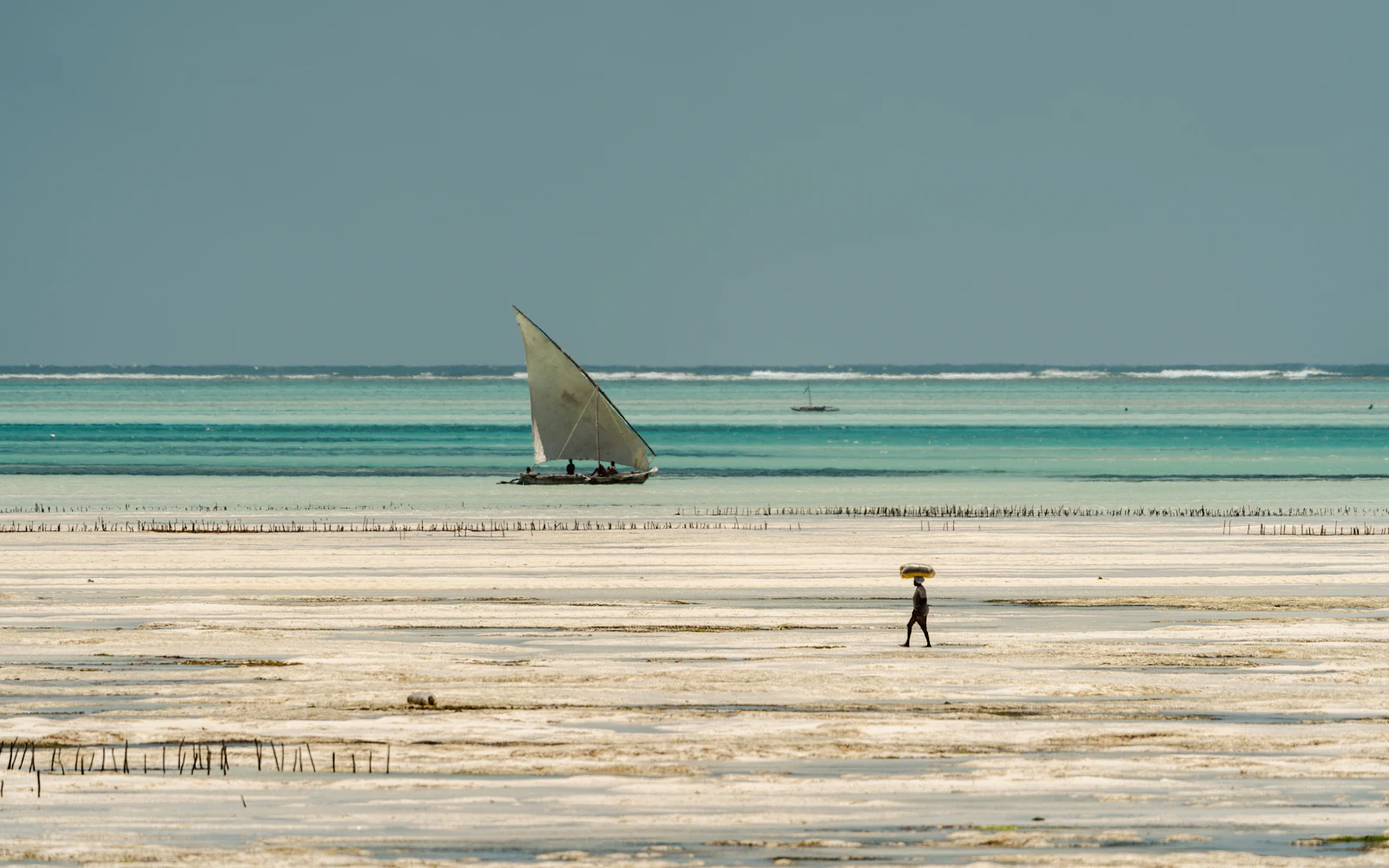
Photo: Aron Marinelli / Unsplash
Jambiani is a string of fishing and seaweed-farming villages on Zanzibar's south-east coast, between Paje and Makunduchi. Its beach runs for about 5.5 km and is strongly tidal: you swim around high tide and walk the flats at low tide. It suits travellers who want a quiet, village-based stay rather than resorts or nightlife.
Jambiani at a glance
- Where: the south-east coast of Unguja, Zanzibar's main island, just south of Paje.
- The beach: around three and a half miles (5.5 km) of white sand in front of the village, with a reef well offshore.
- Tides: big. At low tide the sea pulls back across a wide lagoon; at high tide it returns to the sand.
- Feel: a lived-in village of a few thousand people, with guesthouses, small hotels and very little nightlife.
- Drive time: around an hour from the airport or Stone Town, a little more in traffic.
- Nearby: Paje (around 10 minutes), Kuza Cave, Kizimkazi for dolphins, and Jozani Forest on the road in.
Jambiani beach at high tide and low tide
Zanzibar has two high and two low tides a day. Around the island the spring tidal range is more than three metres, and on a flat coast like Jambiani's that vertical change becomes a huge horizontal one.
High tide
The lagoon fills with clear, shallow water right up to the sand. This is your swimming window, and the time local fishermen sail their ngalawa outrigger canoes in and out. Aim to swim from roughly two hours before to two hours after high water.
Low tide
The sea retreats towards the reef and leaves sand, seagrass, rock pools and rows of seaweed farms. You can walk the whole length of the beach and a long way out. On spring tides, around full and new moon, the lows are lowest; in the neap weeks between, the water moves much less and stays closer to the beach.
Tide times shift by roughly 50 minutes a day, so check a tide table for your exact dates. Our Zanzibar tides guide explains spring and neap tides and how to read a table.
Village life and seaweed farming
Jambiani is a working village first. Fishing and seaweed farming have long been the main incomes, and for many families the shoreline is their livelihood.
Commercial seaweed farming arrived in Zanzibar in 1989 and spread along the east coast. Farmers tie seaweed to lines between wooden stakes in the shallow intertidal zone, which is exposed at spring low tides, and tend it on foot as the water drops. Research by the State University of Zanzibar found that over 90 per cent of the island's seaweed farmers are women.
Warmer sea temperatures have made seaweed harder to grow in recent years. In Jambiani, some women have moved into sponge farming with Marine Cultures, a charity that has worked in the village since 2009 and also runs a coral nursery in the Jambiani lagoon to restore damaged reef.
How to see it respectfully
- Go with a local guide on a village walk. Good tours visit seaweed plots at low tide, a family home and craft work such as coconut-husk rope, and put money back into the community.
- Ask before you photograph anyone, especially women working in the water.
- Walk around the seaweed lines, never across them, and keep off the stakes.
- Cover shoulders and knees when you leave the beach. Swimwear in the village causes offence.
Who Jambiani suits (and who it doesn't)
A good fit if you
- Want a slow, quiet stay where village life carries on around you.
- Enjoy long beach walks, rock pools and watching the tide change the view.
- Travel on a mid-range or tight budget; guesthouses and small hotels outnumber big resorts.
- Kitesurf with some experience and want a quieter spot than Paje.
Think twice if you
- Want to swim at any time of day. The north coast at Nungwi and Kendwa is far less tidal.
- Want bars and party nights within walking distance. Paje is livelier, though only a short taxi ride away.
- Need a big resort with lots of facilities on site.
Things to do in Jambiani
Walk the beach and the flats at low tide
Start at one end at low water and walk the shore. You will pass fishermen mending nets, women heading out to the seaweed plots, and pools full of small fish. Wear reef shoes; there are sea urchins and sharp coral fragments on the flats.
Sail a ngalawa at high tide
Local fishermen offer trips in traditional outrigger canoes, often combined with snorkelling in the lagoon or near the reef. Agree the route, time and what is included before you set off, and check there are life jackets on board.
Swim in Kuza Cave
Kuza Cave, in the village, is a limestone cave with a clear, fresh-water pool you can swim in. It is run as a local community project, and guides explain the cave's cultural importance. Our Jozani Forest and Kuza Cave tour pairs it with the red colobus monkeys of Jozani.
Kitesurf in season
Jambiani gets the same trade winds as Paje, roughly mid-June to mid-October and late December to mid-March. Kite schools describe it as having more rocks and coral at low tide than Paje, so most beginners learn on Paje's lagoon and ride here once they are confident.
See the reef work
Marine Cultures has a tours section on its website for people who want to learn about sponge farming and coral restoration in the lagoon. Contact the charity directly to ask what is running during your stay.
Things to do near Jambiani
- Paje: cafés, kite schools and the coast's busiest evenings, around 10 minutes north. See our guide to things to do in Paje.
- The Rock: the restaurant on a rock off Michamvi Pingwe, around half an hour north. Read our guide to The Rock restaurant for how the tide affects your visit.
- Kizimkazi dolphins: the fishing village on the south coast is around 30 to 40 minutes away. Our Kizimkazi dolphin tour goes out early, when the sea is usually calmer.
- Mtende Beach: a small cove beach towards the southern tip; see our Mtende Beach trip.
- Jozani Forest: Zanzibar's national park, on the main road between Stone Town and the south-east coast.
- Stone Town: around an hour away, best as a full day with a guide.
How to get to Jambiani
- From the airport: around an hour by road. A pre-booked airport transfer is the simplest option, and your driver can stop for cash or a SIM card on the way.
- From Stone Town: also around an hour, via the main road east past Jozani Forest.
- By dala dala: public minibuses run from Stone Town towards the south-east villages. They are cheap and slow, with frequent stops, and best with light luggage.
- From Nungwi or Kendwa: allow around 1.5 to 2 hours; the road goes inland.
Where to eat and stay in Jambiani
Places to stay are strung along the shore for several kilometres, from backpacker hostels and guesthouses to small boutique hotels. The northern end is closer to Paje's cafés and kite schools; the southern stretch feels quieter and more rural.
A beachfront room gives you the high-tide swim on your doorstep. A pool is worth having for the hours when the sea is far out. Ask how far your room is from the main road and whether there is lighting on the path at night.
Food is mostly simple and good: grilled fish, octopus curry, rice and coconut dishes at beach restaurants and local cafés. For general booking advice, see where to stay in Zanzibar.
Jambiani weather and when to go
Jambiani has the same tropical climate as the rest of Zanzibar: warm all year, with long rains roughly from mid-March to May and shorter rains around November. From June to October the south-east trade wind, the kusi, blows steadily along this coast, which keeps it fresh and often breezy in the afternoons. From late December to March the lighter north-east kaskazi brings hotter, calmer days.
Local tips for Jambiani
- Check the tide table every evening and plan the next day's swim around high water.
- Pack reef shoes. You will want them on the flats and on boat trips.
- Bring a torch. Village lanes and the beach path are dark at night.
- Carry small Tanzanian shilling notes for local cafés, boat trips and tips.
- Low tide around midday is bright and exposed. Go early or late, with a hat and plenty of water.
- Buy seaweed soaps and sponge products locally; it supports the women who grow them.
Plan it with Zanzibar Ibrahim Tours
We collect guests from Jambiani hotels for Kuza Cave and Jozani, dolphin mornings at Kizimkazi and airport transfers, and we time trips around the tide. Message us on WhatsApp (+255 675 366 829) or through our contact page with your dates and hotel. Current prices are on each tour page, such as the Jozani Forest and Kuza Cave tour.
Sources
- NASA Earth Observatory: A seaweed economy tied to the tides
- Shaghude et al., Western Indian Ocean Journal of Marine Science (2002): tides around Zanzibar
- UK FCDO: Tanzania travel advice, safety and security
- Thomson Reuters Foundation via Global Citizen: Zanzibar's women sea farmers grow sponges
- Marine Cultures: sponge farming and coral restoration
- Expert Africa: Jambiani village tour
- Kite Centre Zanzibar: kitesurfing in Zanzibar
FAQs
Can you swim at Jambiani beach?
Yes, around high tide, when the lagoon fills right up to the sand. At low tide the sea retreats a long way towards the reef, so check a tide table and plan your swims for a couple of hours either side of high water.
What is Jambiani known for?
Its long tidal beach, seaweed farming, village life and Kuza Cave. It is also a quieter base for kitesurfers than neighbouring Paje.
Is Jambiani better than Paje?
It depends on what you want. Jambiani is quieter and more village-like; Paje has more cafés, kite schools and nightlife. They are only around 10 minutes apart, so it is easy to stay in one and visit the other.
How far is Jambiani from the airport?
Around an hour by road, and about the same from Stone Town. Allow extra time in traffic or after dark.
Can you kitesurf in Jambiani?
Yes, in the windy seasons from roughly mid-June to mid-October and late December to mid-March. There are more rocks and coral at low tide than in Paje, so it suits riders with some experience.
Can I visit the seaweed farms in Jambiani?
Yes, ideally with a local guide on a village walk at low tide. Ask before taking photos and walk around the seaweed lines rather than across them.
What is the weather like in Jambiani?
Warm all year. The main rains fall roughly from mid-March to May, with shorter rains around November, and June to October is often breezy on this coast.