
Scuba Diving in Zanzibar: Dive Sites, Seasons and Courses
Updated November 17, 2026 · Zanzibar Ibrahim Tours
Photo: Moses Londo / Unsplash
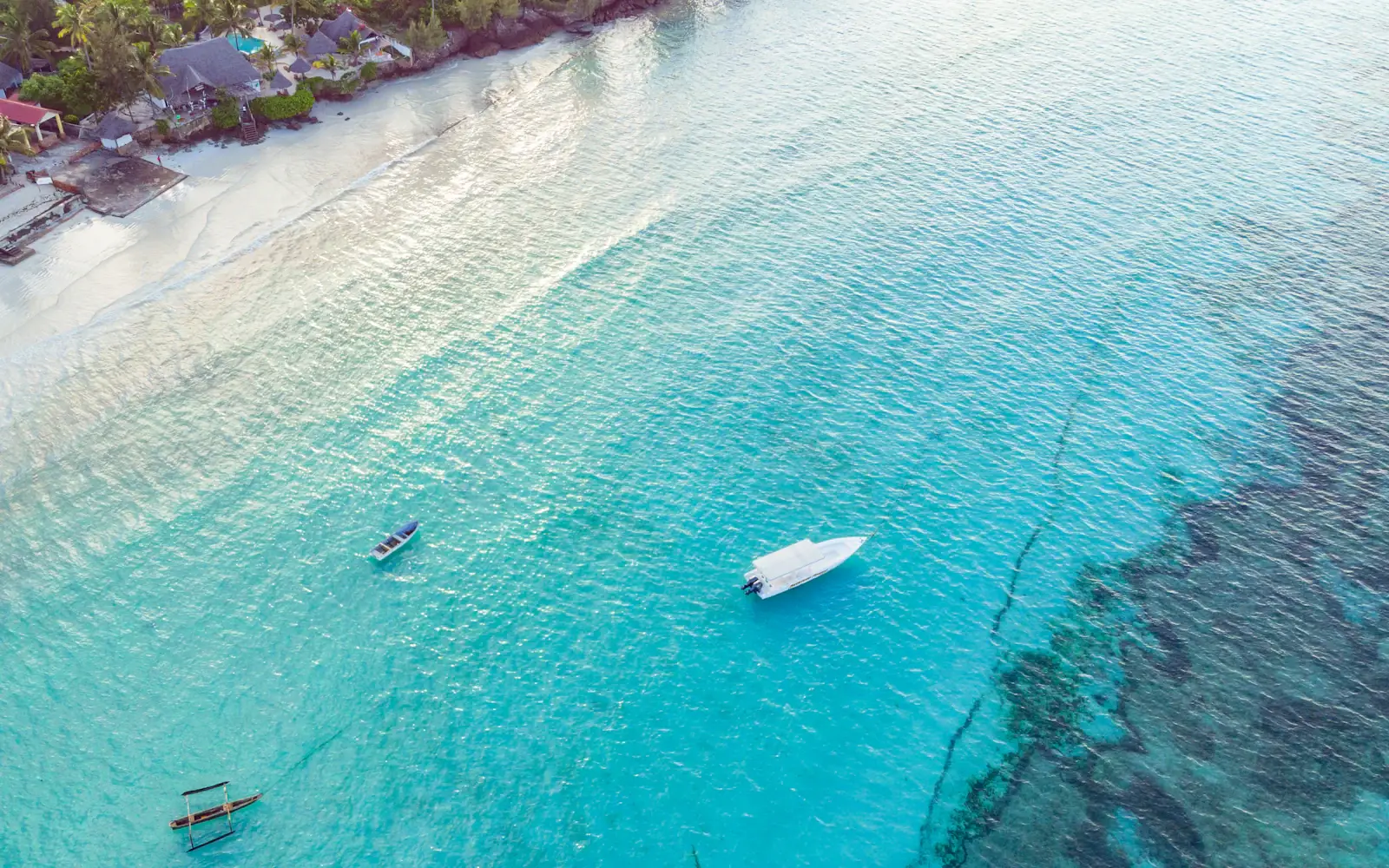
Scuba diving in Zanzibar means warm-water reef diving that suits beginners and steady intermediate divers, with the best-known sites at Mnemba Atoll, the north coast around Nungwi, and the reefs and wrecks off Stone Town. Leven Bank and Pemba Island add stronger currents for experienced divers, and whale sharks visit Mafia Island in season.
Zanzibar diving at a glance
- Main areas: Mnemba Atoll (north-east), Nungwi, Kendwa and Leven Bank (north), the Stone Town reefs and wrecks (west) and the Kizimkazi and Menai Bay area (south).
- Water: warm all year, typically in the mid to high 20s °C according to local dive centres.
- Best conditions: calm spells between roughly October and March tend to give the clearest water; the long rains, around April and May, are the least reliable.
- Courses: PADI and SSI centres offer try-dives and full certification courses.
- For experienced divers: Leven Bank and the walls and drift dives of Pemba Island.
- Whale sharks: around Mafia Island, with peak sightings from about October to March.
- Booking: Zanzibar Ibrahim Tours can arrange diving trips for you.
Is Zanzibar good for scuba diving?
Yes, with the right expectations. Zanzibar has easy, warm, mostly gentle diving with healthy patches of hard and soft coral, turtles, moray eels, reef fish and the occasional dolphin on the boat ride out. It is an excellent place to learn and to log relaxed fun dives between beach days.
It is not the place for big walls and strong-current adrenaline every day. For that, experienced divers head to Leven Bank on a calm day or take a short flight to Pemba. Visibility also varies with the season and the tide, so a single disappointing dive is not the whole story.
The main dive areas in Zanzibar
Mnemba Atoll
Mnemba is a small private island surrounded by a reef, a few kilometres off the north-east coast near Matemwe. The surrounding waters are a marine conservation area, and named sites such as Kichwani, Wattabomi, Big Wall and Aquarium offer everything from shallow coral gardens to deeper walls. Turtles are common, and dolphins are sometimes seen on the way.
Because Mnemba is also Zanzibar's busiest snorkelling spot, the surface can be crowded with boats at peak times. The island itself is private, so dives are boat-based around the reef. The authorities charge conservation fees to visit the area; ask whether they are included in your dive price. If some of your group snorkel rather than dive, our Mnemba Island tour and the Mnemba Atoll snorkelling guide cover the snorkelling side.
Nungwi, Kendwa and Leven Bank
The north coast has a string of reefs close to Nungwi and Kendwa, with sites such as Hunga Reef known for good visibility. These are mostly moderate dives suited to newly qualified divers and refreshers, and because the north is less affected by low tide, boats can leave the beach at most times of day.
Further offshore, Leven Bank is an open-ocean bank in the channel north of the island. Currents can be strong and the reef drops into deep water, so it is for experienced divers only, and only when conditions allow. Big pelagic fish are the reason to go.
Stone Town reefs and wrecks
Off Stone Town, a short boat ride takes you to reefs around the small islands of the Zanzibar channel, such as Bawe and Pange, with Boribu Reef further out. The best-known wreck is the Great Northern, a British cable ship that was wrecked near Zanzibar in 1902. It now lies in shallow water as an artificial reef with lionfish, moray eels and glassfish.
Stone Town diving is good for training dives, for a relaxed morning before a city afternoon, and for anyone staying in town who does not want a long drive north.
The south: Kizimkazi and Menai Bay
The south coast around Kizimkazi has fewer divers and some coral gardens that drop away sharply. It is best known for dolphins, which our Kizimkazi dolphin tour visits by boat. Diving here is usually arranged as a special trip rather than a daily schedule.
Best time for diving in Zanzibar
You can dive in Zanzibar all year, but conditions change with the monsoon winds and rains.
- Roughly October to March: the period most dive centres and guides describe as calmest, with the best visibility on many days. December to February brings hot weather and generally settled seas.
- Around April and May: the long rains can bring rougher seas, runoff and lower visibility, and some trips are cancelled for weather.
- Roughly June to September: cooler, often windier months. The east coast can be choppy, but many days are still good, and humpback whales are sometimes seen offshore from around July to October.
Day to day, the tide matters as much as the month. Visibility is often better on an incoming tide, and departure times move with the tide, especially on the east coast. Our guide to Zanzibar tides explains the pattern, and our best time to visit guide covers the weather month by month.
Dive courses in Zanzibar: PADI and SSI
Most dive centres on the island teach through PADI or SSI. Both are recognised worldwide, and the course structure is similar.
- Try-dive (Discover Scuba Diving or SSI Try Scuba): a short briefing, pool or shallow-water skills, then a supervised dive. No certificate needed.
- Scuba Diver: a shorter, partial qualification that lets you dive with a professional to a limited depth.
- Open Water Diver: the full entry-level certification, combining theory, confined-water skills and four open-water dives. PADI's minimum age is 10, with junior limits until 15, and certified Open Water divers are trained to 18 metres.
- Advanced and specialty courses: deep, navigation, nitrox and more, if you are already certified.
Every student completes a medical questionnaire before diving. Some conditions require a doctor's sign-off, so read the form before you travel. Doing the theory online at home frees up more of your holiday for the beach and the water.
Pemba Island: the advanced option
Pemba, Zanzibar's northern sister island, is the archipelago's serious diving destination. Its coast has steep walls, channels and drift dives, and the area around Misali Island is a protected conservation area with dense coral. Some sites suit newer divers, but many have strong currents and are for experienced divers only.
Pemba is a separate trip: you reach it by a short flight or by boat from Zanzibar, and it deserves at least a few nights. If you are an Advanced diver with time to spare, it is worth the extra effort. If you are learning, stay on Zanzibar.
Whale sharks at Mafia Island
Whale sharks gather off Mafia Island, south of Zanzibar, during the warmer months. WWF gives the peak sighting season as October to March. Most encounters are while snorkelling rather than scuba diving, and the local population is small, so sightings are likely in season but never guaranteed.
Mafia is reached by a short flight, often via Dar es Salaam, so it works best as two or three nights on its own. Choose an operator that follows a code of conduct: keep your distance, do not touch the sharks and limit the number of swimmers in the water. Whale sharks are only occasionally seen around Zanzibar itself.
Scuba diving prices in Zanzibar: what affects the cost
We do not publish dive prices on this page because they depend on what you book. The main factors are:
- The number of dives, and whether you buy a single dive or a package.
- The site and distance: Mnemba and Leven Bank need longer boat rides than local reefs.
- Conservation area fees, which are set by the authorities and are sometimes charged separately.
- Equipment rental, nitrox, and course materials or certification fees.
- Hotel transfers, which depend on where you are staying.
- Private guides or private boats.
For a wider explanation of how tour pricing works on the island, read our guide to Zanzibar excursion prices.
Safety and responsible diving
- Check your insurance covers scuba diving to the depth you plan, including evacuation.
- Bring your certification card and logbook, or have them on your phone.
- Do not dive within a day of flying home. Divers Alert Network guidance suggests a minimum surface interval of 12 hours after a single dive and 18 hours after several dives or several days of diving; we usually suggest keeping your last day dive-free.
- Look at the equipment and the boat: working radios, oxygen, a first-aid kit and gear that fits.
- Do not touch coral or wildlife, and keep your fins off the reef.
Local tips from our guides
- Ask for an early start at Mnemba; the reef is usually quieter before the snorkelling boats arrive.
- If you get seasick, ask for sites with a shorter boat ride, such as the Stone Town reefs or nearby northern reefs.
- Book refreshers early in your trip if you have not dived for a while, then save Leven Bank or Pemba for later.
- Combine diving with snorkelling days for non-divers. Our snorkelling in Zanzibar guide lists the best spots.
- If you are adding a safari, do it before your dives, or leave a full day between your last dive and any flight, including light-aircraft safari flights.
Plan your dive with Zanzibar Ibrahim Tours
Zanzibar Ibrahim Tours can arrange your diving trips, from a first try-dive to a day at Mnemba. Message us on WhatsApp (+255 675 366 829) or use our contact page with your certification level, dates and where you are staying, and we will suggest the right dives. For non-divers in your group, see our Mnemba snorkelling tour.
Sources
- PADI: Open Water Diver course
- Divers Alert Network: Guidelines for flying after diving
- WWF UK: Interesting facts about whale sharks (Mafia Island)
- Atlantic Cable: CS Great Northern history
- ATTA: Zanzibar revises entry fees for marine conservation areas
- Fundu Lagoon, Pemba: Diving
- Tanzania Specialist: Zanzibar scuba diving sites
FAQs
Is Zanzibar good for scuba diving?
Yes, especially for beginners and relaxed fun diving, with warm water, coral reefs, turtles and easy boat dives. Experienced divers looking for walls and drift dives should add Leven Bank on a calm day or a trip to Pemba.
What is the best month for diving in Zanzibar?
Calm spells between roughly October and March usually give the best visibility. The long rains around April and May are the least reliable, though you can dive all year.
Can you dive at Mnemba Island?
Yes. Dive boats visit the reefs around Mnemba Atoll, a marine conservation area off the north-east coast, though landing on the private island itself is not allowed. Conservation fees set by the authorities apply, so check whether they are included in your price.
Do I need a certificate to dive in Zanzibar?
No for a try-dive, which is done with an instructor after a short briefing and skills session. For independent fun dives you need a recognised certification such as PADI or SSI Open Water.
Can you see whale sharks in Zanzibar?
Only occasionally around Zanzibar itself. The reliable place is Mafia Island, south of Zanzibar, where WWF gives the peak sighting season as October to March.
Is Pemba better than Zanzibar for diving?
For experienced divers, Pemba offers more dramatic walls, channels and drift dives. For beginners and casual divers, Zanzibar's calmer, easier sites are usually the better choice.
How long should I wait to fly after diving in Zanzibar?
Divers Alert Network guidance suggests at least 12 hours after a single dive and 18 hours after multiple dives or days of diving. We usually suggest keeping your last day in Zanzibar dive-free.
Can Zanzibar Ibrahim Tours book my dives?
Yes. Zanzibar Ibrahim Tours can arrange diving trips; send us your certification level, dates and hotel on WhatsApp or through our contact page.