
Zanzibar Currency, Money and Tipping: A Practical Local Guide
Updated November 17, 2026 · Zanzibar Ibrahim Tours
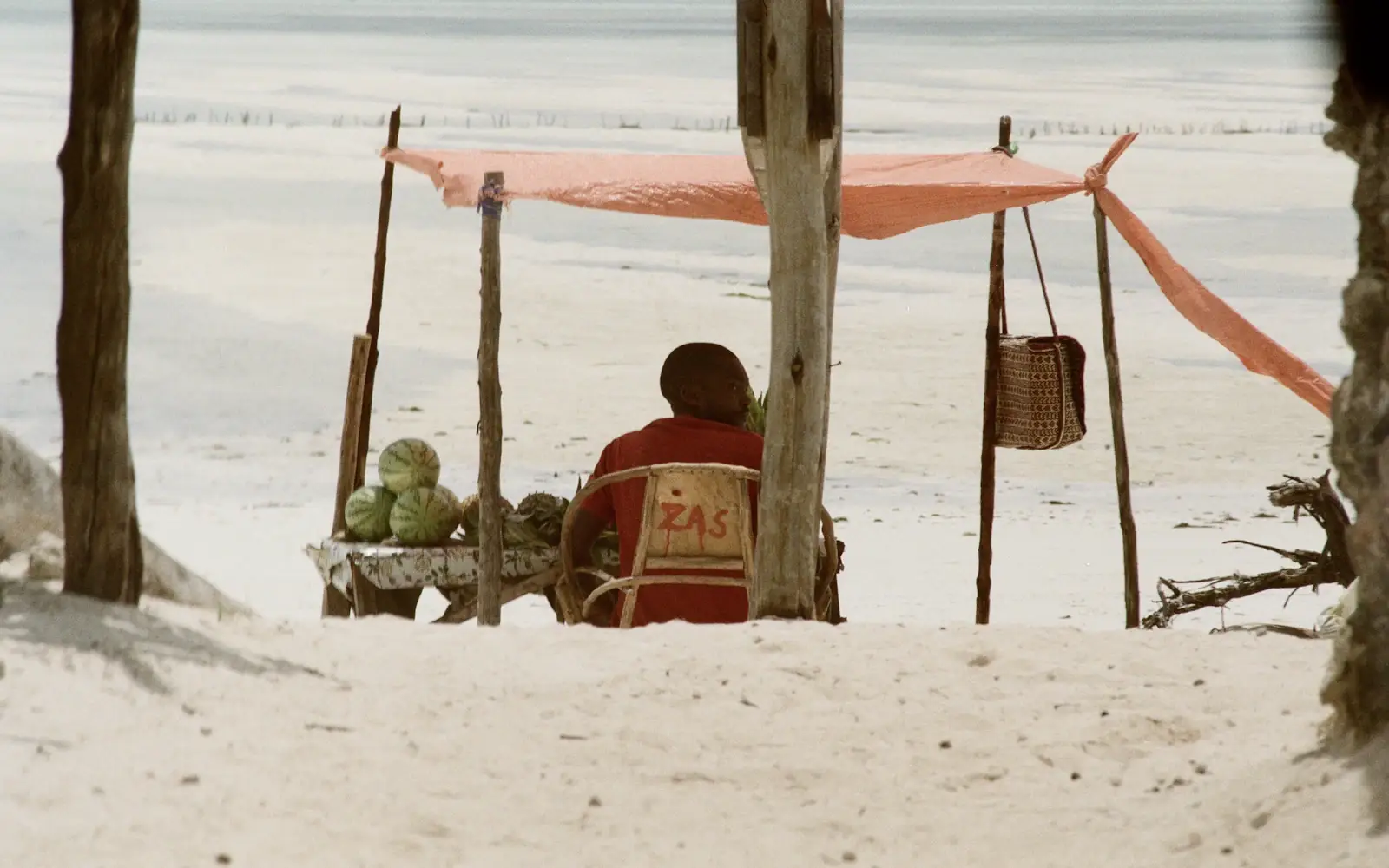
Photo: Kaspars Eglitis / Unsplash
The Zanzibar currency is the Tanzanian shilling (TZS), the same money used on mainland Tanzania. Since March 2025, Bank of Tanzania rules say goods and services must be priced and paid for in shillings, so change foreign cash at a bank or bureau de change, or use ATMs and cards. Tipping is welcome but always optional.
Zanzibar money at a glance
- Currency: Tanzanian shilling, written TZS or TSh. Price tags often use the local style "5,000/=".
- Largest note: the 10,000-shilling note, so even a modest withdrawal makes a thick wad.
- US dollars: the easiest foreign currency to change. Bring clean notes from the 2009 series or later.
- ATMs: plenty in Stone Town and Zanzibar Town, far fewer at the beaches.
- Cards: accepted at most mid-range and upmarket hotels and many tourist restaurants, often with a surcharge.
- Tipping: optional. Around 10% in restaurants without a service charge is common.
What currency is used in Zanzibar?
Zanzibar is part of the United Republic of Tanzania, so it uses the Tanzanian shilling issued by the Bank of Tanzania. There is no separate Zanzibar currency today.
If you have searched "Zanzibar currency" and found pages about rupees, that is history. The Zanzibari ryal was used between 1882 and 1908 and the Zanzibari rupee between 1908 and 1935, before the East African shilling took over in 1936. Tanzania introduced its own shilling in 1966.
Exchange rates move, so check a live rate on your banking app before you change money, and use it to sanity-check any quote.
Can you use US dollars in Zanzibar? The 2025 shilling rule
For years, many Zanzibar businesses priced things in dollars. That has changed. In a public notice dated 2 May 2025, the Bank of Tanzania explained that under regulations published on 28 March 2025, "pricing and payment for all goods and services within the country must be in Tanzanian Shillings".
The same notice says it is an offence to quote, advertise or accept payment in foreign currency, or to refuse payment in shillings. Foreigners, including tourists, are expected to exchange money through commercial banks or bureaux de change, and can keep paying by bank card or other digital methods. The regulations list some permitted foreign-currency transactions, so you may still see dollar prices for certain international bookings.
In practice, plan to pay for everyday things in shillings: restaurants, taxis, shops, markets, street food and entrance fees. If someone insists on dollars at a poor rate, you are entitled to pay in shillings instead.
US dollars remain the easiest foreign currency to change. Euros and pounds can also be exchanged in Stone Town, though rates can be less favourable and fewer places take them outside town.
Old US dollar notes: why bring 2009-series or newer
Banks and bureaux de change in Tanzania commonly refuse US notes printed before 2009, and some places set the cut-off at 2006 for 50 and 100 dollar notes. This is widely reported by travel companies rather than set out in an official tourist notice, so treat it as a practical rule rather than law.
- Check the series year printed on the front of each note before you leave home.
- Bring clean, crisp notes with no tears, ink marks or heavy folds. Damaged notes are often refused.
- Larger notes (50s and 100s) usually get a better exchange rate than small ones.
- Ask your home bank or currency provider for newer-series notes.
ATMs in Zanzibar: where they are and how to use them
Stone Town and Zanzibar Town have the most ATMs, run by banks including PBZ (the People's Bank of Zanzibar), CRDB, NBC and Exim. Nungwi, Paje and a few other beach areas have machines too, but far fewer, and they can run out of cash at weekends and on public holidays.
- Carry two cards if you can, ideally one Visa and one Mastercard, as some machines accept only one network.
- Expect fees and limits. Local ATMs usually charge a fee and cap each withdrawal, and your own bank may add charges. Check both before you travel.
- Choose shillings. If a machine or card terminal offers to charge you in your home currency, decline and pay in shillings for a fairer rate.
- Use ATMs in daylight, ideally inside a bank or hotel, and cover your PIN.
- Tell your bank you are travelling, so your card is not blocked as suspected fraud.
Landing soon? Our Zanzibar airport guide covers the exchange counters and ATMs on arrival.
Paying by card and mobile money
Cards are accepted at most mid-range and upmarket hotels, many restaurants aimed at visitors, larger shops and dive centres. A card surcharge of a few percent is common, so ask before you pay.
Cash is still needed for taxis, dala dalas, small cafés, markets and street food. The food stalls at Forodhani, for example, are cash only, as our Forodhani Gardens night market guide explains.
Locals pay for almost everything with mobile money such as M-Pesa (Vodacom), Airtel Money and Mixx by Yas. Visitors with a registered local SIM can often use it too, and some guides and drivers are happy to receive tips that way.
Changing money in Zanzibar
- Use banks or licensed bureaux de change. Stone Town has the most choice. Bring your passport, as it is usually requested.
- Never change money on the street. Apart from the rules, it is a classic way to receive short-counted or fake notes.
- Count your money at the counter and keep the receipt.
- Airport and hotel rates are usually worse than in town, so change just enough there for your first day.
- Spend or change leftover shillings before you leave. They are hard to exchange outside Tanzania.
For a sense of overall budget, see our Zanzibar trip cost guide, and for what affects tour prices, our guide to Zanzibar excursion prices.
Tipping in Zanzibar: who, when and how much
Tipping in Zanzibar is voluntary, and no one should pressure you. Tips do make up a real part of income for guides, drivers, boat crews and hotel staff, so a tip for good service is appreciated. The ranges below are common practice reported by several tour operators and a local Zanzibar publication; treat them as a starting point, not a rule. Tips in shillings are often preferred, though clean US dollar notes are accepted.
Tour guides
For a private full-day guide, visitors commonly give somewhere around 10 to 20 US dollars a day (or the shilling equivalent), shared across your group. One specialist tour operator suggests about 8 to 10 dollars per guest per day. For a short or shared tour, less is fine. Hand it to the guide personally at the end.
Drivers and taxis
For an airport or hotel transfer, a few dollars per transfer is a common thank-you, given to the driver directly. A driver who stays with you for a full day is usually tipped along the same lines as a guide. Taxi drivers on single trips do not expect a tip; rounding up is enough.
Boat crews
On dhow cruises, sandbank trips and snorkelling days, the crew usually shares one tip. Give it to the captain or lead guide at the end and say it is for everyone. Many guests give a small amount each, similar to what they would give a guide on a short tour.
Hotel staff
Many hotels have a communal tip box at reception, shared among all staff, including the people you never see. Common guidance is around 3 to 5 dollars per guest per day into the box at the end of your stay; where there is no box, a dollar or two a day for housekeeping is common. Butlers and private chefs usually do not share the box, so tip them directly. Porters get a small note per bag.
Restaurants and bars
Check the bill first: some places add a service charge. If not, up to about 10% is common in restaurants for good service. At local cafés and street stalls, tipping is not expected; leaving the small change is a kind gesture.
When not to tip
Managers are not usually tipped. In markets and on some spice farm visits, people may offer help you did not ask for, such as carrying bags or weaving leaf crowns, and then expect a tip. A friendly "hapana, asante" (no, thank you) at the start avoids awkwardness. Our Darajani market guide has more on bargaining politely.
Local tips on money in Zanzibar
- Keep small notes separate. A wallet of 1,000 and 2,000 shilling notes for tips, water and taxis saves pulling out a big wad in public.
- Split your cash between your bag, your hotel safe and a card or two.
- Bring tip envelopes for guides and hotel tip boxes. It makes giving simple and discreet.
- Withdraw in Stone Town before heading to a quiet beach, especially before a weekend or holiday.
- Ask what a price includes before agreeing, whether it is a taxi, a boat or a market purchase.
Plan it with Zanzibar Ibrahim Tours
Our tour pages show current prices and exactly what is included, so there are no surprises on the day. Browse all our Zanzibar tours, or contact us or message us on WhatsApp at +255 675 366 829 with any money questions before you travel.
Sources
- Bank of Tanzania: public notice on the use of foreign currency (2 May 2025)
- Expert Africa: tipping in Zanzibar
- The Fumba Times: Hospitality, how to tip right
- Altezza Travel: Tanzania bans foreign currency payments
- Wise: where to exchange money in Zanzibar
- Wikipedia: Zanzibari rupee (currency history)
FAQs
What currency is used in Zanzibar?
Zanzibar uses the Tanzanian shilling (TZS), the same currency as mainland Tanzania. There is no separate Zanzibar currency today.
Can I pay with US dollars in Zanzibar?
Bank of Tanzania rules since March 2025 require goods and services to be priced and paid in shillings, and tourists are expected to change foreign cash at banks or bureaux de change. Bring dollars to exchange, and pay day-to-day costs in shillings or by card.
Should I bring dollars, euros or pounds to Zanzibar?
US dollars are the easiest to exchange, as long as the notes are clean and from the 2009 series or later. Euros and pounds can be changed in Stone Town, though usually at less favourable rates.
Are there ATMs in Nungwi and Paje?
Yes, but far fewer than in Stone Town, and they sometimes run out of cash at weekends. Withdraw what you need in town before heading to a quiet beach.
Can I pay by card in Zanzibar?
Most mid-range and upmarket hotels and many tourist restaurants accept cards, often with a small surcharge. Taxis, markets, street food and small cafés usually need cash.
How much should I tip a tour guide in Zanzibar?
Tipping is optional, but for a private full-day guide visitors commonly give around 10 to 20 US dollars a day, or the shilling equivalent, shared across the group. Give less for short or shared tours.
Is tipping expected in Zanzibar restaurants?
Not expected, but appreciated. If there is no service charge on the bill, up to about 10% for good service is common in restaurants.
Why was my old 100 dollar note refused in Zanzibar?
Many banks, bureaux and businesses in Tanzania refuse US notes printed before 2009, and some refuse 50s and 100s older than 2006. Torn or marked notes are also often rejected.