
History of Zanzibar: A Timeline and the Places You Can See It
Updated November 17, 2026 · Zanzibar Ibrahim Tours
Photo: Alferio Njau / Unsplash
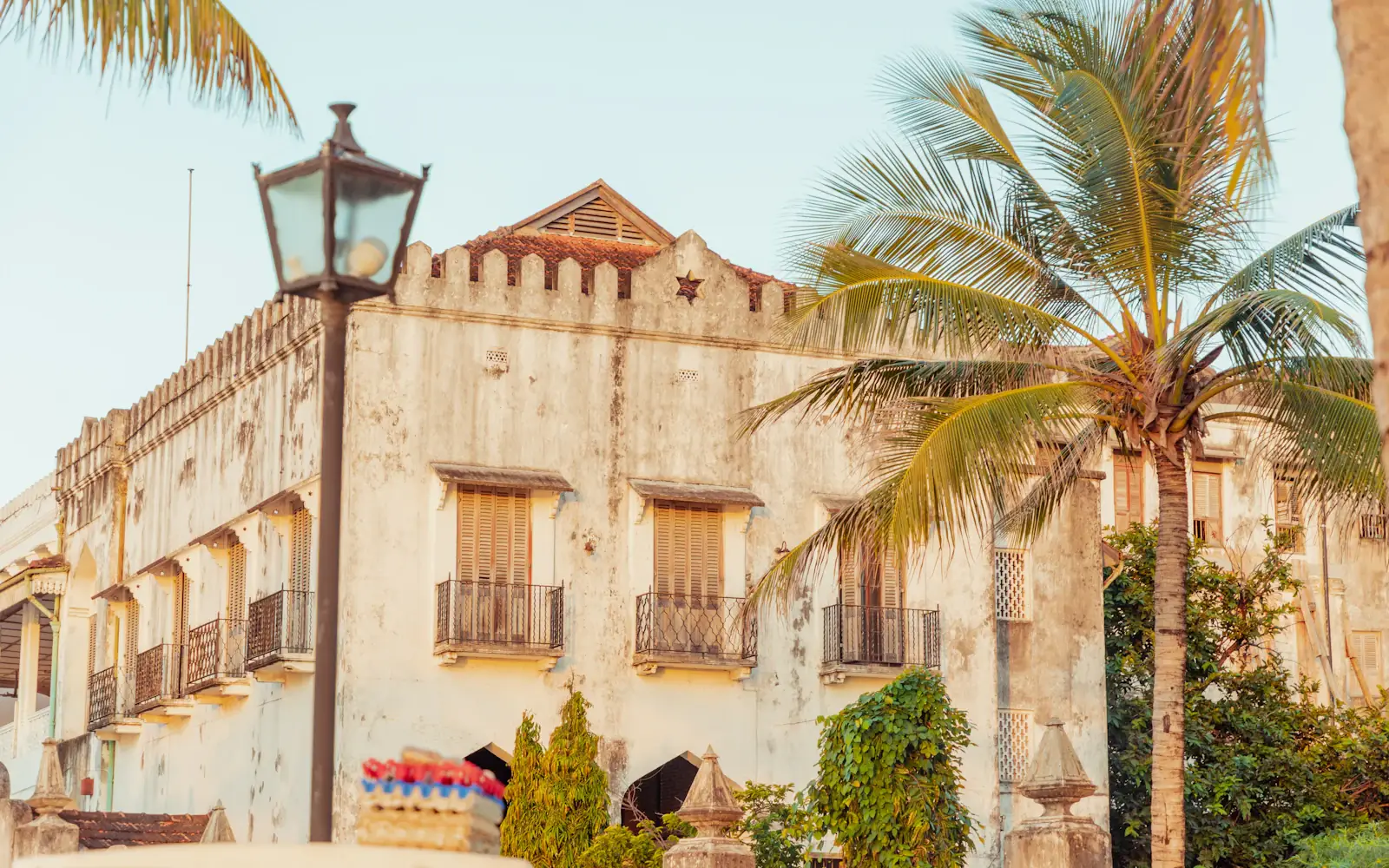
The history of Zanzibar is the story of an Indian Ocean crossroads. Swahili trading towns, Portuguese captains, Omani sultans who grew rich on cloves and the slave trade, a British protectorate from 1890, independence in December 1963, a revolution in January 1964 and union with Tanganyika that April all left marks you can still see in Stone Town.
Below is a checked timeline, then where to see each chapter on the ground today, from the team at Zanzibar Ibrahim Tours in Shangani.
Zanzibar history timeline at a glance
- Before 1500: Zanzibar is part of the Swahili coast, trading with Arabia, Persia and India on the monsoon winds.
- Early 1500s: The Portuguese, who reached East Africa with Vasco da Gama, take tribute from Zanzibar and dominate the coast for most of the next two centuries.
- 1698: Omani forces drive the Portuguese from the coast, and Zanzibar comes under the rulers of Oman.
- 1830s to 1840: Sayyid Said bin Sultan settles in Zanzibar and, by 1840, makes it his capital instead of Muscat.
- 1861: After Said's death in 1856, Zanzibar and Oman become separate sultanates.
- 1873: A treaty with Britain closes the Zanzibar slave market. The foundation stone of Christ Church Cathedral is laid on the site that Christmas.
- 1890: Zanzibar becomes a British protectorate.
- 27 August 1896: The Anglo-Zanzibar War, usually called the shortest war in history, is over in about 40 minutes.
- 1897: The legal status of slavery is abolished.
- 10 December 1963: Independence, as a constitutional monarchy under the sultan.
- 12 January 1964: The Zanzibar Revolution overthrows the sultan.
- 26 April 1964: Union with Tanganyika. Later that year the country takes the name United Republic of Tanzania.
- 2000: Stone Town is inscribed as a UNESCO World Heritage Site.
From Swahili traders to Omani sultans
Zanzibar's position decided its fate. For half the year the monsoon winds carry ships from Arabia and India down the African coast, and for the other half they carry them home. An island a short sail from the mainland was the natural meeting point.
Over many centuries, towns grew up along this coast that mixed African, Arab, Persian and Indian influences into Swahili culture. One of the oldest surviving mosques on the East African coast stands at Kizimkazi in the south of the island, with an inscription dated to the early 1100s.
Portuguese ships arrived at the end of the 15th century, and Portugal took tribute from Zanzibar from the early 1500s. Its grip weakened in the 1600s, and by 1698 Omani forces had pushed the Portuguese off the coast. The Old Fort (Ngome Kongwe) on the Stone Town seafront dates from this early Omani period.
The big change came under Sayyid Said bin Sultan, who ruled Oman from 1806. He spent more and more time in Zanzibar from the 1830s and, by 1840, had moved his capital there from Muscat, because his East African territories were earning more than Oman itself. Clove plantations spread across Zanzibar and Pemba in his time, and cloves made the islands famous. Those plantations depended on enslaved labour.
When Said died in 1856 his sons disputed the succession, and in 1861 Zanzibar and Oman were split into two separate sultanates. Sultan Barghash, who ruled from 1870 to 1888, gave Stone Town several of its landmarks, including the Beit al-Ajaib or House of Wonders, completed in 1883 and said to be the first building in East Africa with an electric lift. Part of it collapsed in December 2020, and it has been closed for restoration since.
The slave trade and the Old Slave Market
In the 19th century Zanzibar was the main slave market of the East African coast. Captives were marched from the interior of the mainland to coastal ports, shipped to the island and sold in Stone Town. Many were put to work on the clove plantations of Zanzibar and Pemba; others were sent on to Arabia and beyond.
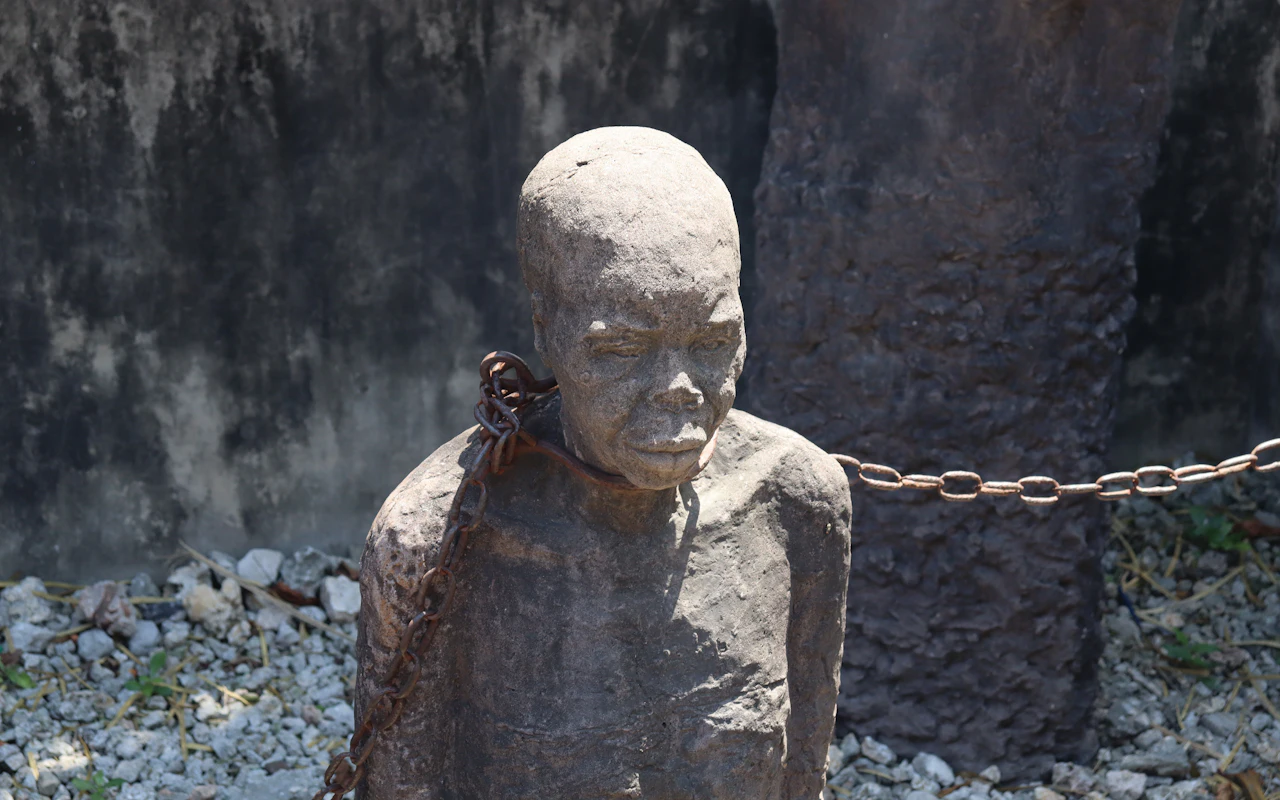
Photo: Polly Sadler / Unsplash
Under British pressure, Sultan Barghash agreed in 1873 to a treaty that closed the market. The Universities' Mission to Central Africa took over the site, and the foundation stone of the Anglican Christ Church Cathedral was laid on Christmas Day 1873. The cathedral opened at Christmas 1879, and its altar is traditionally said to stand where the market's whipping post was.
Closing the market did not end slavery overnight. Trading continued on a smaller scale for years, and the legal status of slavery in Zanzibar was only abolished in 1897.
Visiting the Old Slave Market site today
The site is cared for by the Anglican Diocese of Zanzibar. In June 2016 a heritage centre opened there with the East African Slave Trade Exhibit, created with World Monuments Fund Britain, which follows the trade from capture to sale and its legacy. Outside, a memorial by the Swedish artist Clara Sörnäs (1998) shows five figures in chains, standing in a pit.
Visitors are also shown two small, low underground rooms beneath the former St Monica's hostel, presented as places where captives were held before sale. Allow about an hour and buy tickets at the entrance. Our guides include it on every Stone Town walk and keep the pace slow: it is a place of memory, not a photo stop.
The British protectorate and the shortest war in history
As European powers divided East Africa between them, Britain and Germany settled their claims in 1890 and Zanzibar became a British protectorate. The sultans stayed on the throne, but British officials held the real power.
In August 1896 Sultan Hamad bin Thuwaini died, and Khalid bin Barghash, a son of the former sultan Barghash, took over the palace without British approval. Britain gave him until 9am on 27 August to stand down. When the deadline passed, British warships opened fire on the palace complex on the seafront. Britannica records that by 9.40am the flag was down and the war was over, which is why it is usually called the shortest war in recorded history.
A sultan acceptable to Britain, Hamud bin Muhammad, was installed, and the following year slavery lost its legal status.
Independence, the 1964 revolution and union with Tanganyika
Zanzibar became independent on 10 December 1963 as a constitutional monarchy within the Commonwealth, with Sultan Jamshid bin Abdullah as head of state. Tensions rooted in decades of inequality between a largely Arab ruling class and the African majority were high.
On 12 January 1964, barely a month later, an armed uprising led by John Okello overthrew the sultan, who fled into exile. Abeid Amani Karume of the Afro-Shirazi Party became president. The revolution was violent: many people, especially of Arab and South Asian descent, were killed, and estimates of the death toll vary widely.
On 26 April 1964 Zanzibar united with Tanganyika under Julius Nyerere and Abeid Karume, and later that year the union took the name United Republic of Tanzania. Zanzibar kept its own president, government and House of Representatives for matters outside the union. That is why the islands still have their own tourism commission and why visitors who want to drive need a local Zanzibar permit.
Both anniversaries are public holidays: Revolution Day on 12 January and Union Day on 26 April. Expect official ceremonies and some offices closed. The revolution is still a sensitive subject for many families, on all sides, so let people share as much or as little as they wish.
Freddie Mercury and Zanzibar
The island's most famous son is Freddie Mercury. Britannica records that he was born Farrokh Bulsara on 5 September 1946 in Stone Town, to Parsi parents who had come from India; his father was a clerk for the British colonial government. In 1964, after the revolution, the family moved to England.
Be careful with claims about "the" Freddie Mercury House. Since November 2019 a building in Shangani has housed the privately run Freddie Mercury Museum, in rooms where the family is said to have lived. Whether he was actually born in that building is not established: some accounts say he was born in the government hospital, and more than one house in town has been pointed out over the years. We describe it as a family home, not a proven birthplace.
The museum is a few minutes' walk from our office, and our Stone Town night walking tour passes it. It sets its own hours and ticket prices, so check on the day.
Where to see Zanzibar's history today
- Old Slave Market and Christ Church Cathedral: the most important site for understanding the slave trade, in the Mkunazini area on the east side of Stone Town.
- Old Fort: the Omani-era fort on the seafront has been under major restoration in 2026, so check whether it has reopened before you plan around it.
- House of Wonders and the sultans' palaces: the House of Wonders has been closed since its partial collapse, but you can still see the seafront palaces from outside and from Forodhani Gardens, the park laid out in the 1930s on the old customs waterfront.
- Darajani Market: the covered market hall dates from 1904 and still feeds the town every morning.
- Spice farms: the clove and spice plantations explain the economy of the sultanate. Our spice farm and Stone Town tour puts both in one day.
- Prison Island (Changuu): the government bought the island in 1893 to build a prison, but no prisoners were ever held there and it became a quarantine station instead. Today people go for the giant tortoises and a swim on the Prison Island tour.
Several seafront monuments have been closed for restoration in recent years, so ask us which are open the week you visit. For food stops, rooftops and more, see our guide to things to do in Stone Town.
Local tips for a history walk in Stone Town
- Start early. From about 8am the lanes are cooler and quieter. By midday the heat builds and day-trippers arrive from the beach hotels.
- Follow the story. We usually start at the Old Slave Market, walk through Darajani, then wind through the lanes to the seafront palaces, ending near Forodhani for sunset.
- Use a registered guide. Street touts will offer to show you around. A registered guide gives you dates and context rather than legends.
- Dress for the town, not the beach. Cover shoulders and knees, including for the cathedral. Our Zanzibar dress code guide has the details for men and women.
- Mind Friday prayers. Around midday on Fridays the mosques fill and some shops close for a while, so plan market visits for the morning.
- Ask before photographing people. Doors and buildings are fine; many residents prefer to be asked first.
Plan it with Zanzibar Ibrahim Tours
Our local guides can shape a history walk around what interests you most, from the sultans and the slave trade to Freddie Mercury. Book the Stone Town walking tour and see current prices on the tour page, or message us on WhatsApp at +255 675 366 829 or through our contact page. We reply 24/7.
Sources
- UNESCO World Heritage Centre: Stone Town of Zanzibar
- Encyclopaedia Britannica: Zanzibar
- Encyclopaedia Britannica: Saʿīd ibn Sulṭān
- Encyclopaedia Britannica: Anglo-Zanzibar War
- Encyclopaedia Britannica: Freddie Mercury
- Embassy of the United Republic of Tanzania: 60th Union Day anniversary
- Episcopal News Service: Zanzibar's Christ Church Cathedral opens slave trade heritage centre (2016)
- University of Leicester, Carceral Archipelago: Zanzibar's Prison Island, the prison that never was
FAQs
When was the slave market in Zanzibar closed?
The Zanzibar slave market was closed in 1873, when Sultan Barghash signed a treaty with Britain. Christ Church Cathedral was built on the site and opened in 1879, and the legal status of slavery was abolished in 1897.
When did the Sultan of Oman move his capital to Zanzibar?
Sayyid Said bin Sultan spent more and more time in Zanzibar from the 1830s and had made it his capital instead of Muscat by 1840. After his death, Zanzibar and Oman became separate sultanates in 1861.
What happened in the Zanzibar Revolution of 1964?
On 12 January 1964, a month after independence, an armed uprising overthrew the sultan and Abeid Amani Karume became president. It was violent, many Arab and South Asian residents were killed, and estimates of the death toll vary widely.
When did Zanzibar join Tanganyika to form Tanzania?
Zanzibar and Tanganyika united on 26 April 1964, and the country took the name United Republic of Tanzania later that year. Zanzibar remains semi-autonomous, with its own president and government.
How long did the Anglo-Zanzibar War last?
British ships opened fire at 9am on 27 August 1896 and, according to Britannica, the war was over by about 9.40am. It is usually described as the shortest war in recorded history.
Was Freddie Mercury born in Zanzibar?
Yes. Freddie Mercury was born Farrokh Bulsara in Stone Town on 5 September 1946. The museum in Shangani is in a building linked to his family, but it is not proven that he was born in that exact house.
Why is Stone Town a UNESCO World Heritage Site?
UNESCO inscribed Stone Town in 2000 as an outstanding example of a Swahili coastal trading town, where African, Arab, Indian and European influences meet. Its link with the struggle to end the slave trade was also part of the listing.
Is the House of Wonders in Zanzibar open?
No. Part of the House of Wonders collapsed in December 2020 and, at the time of writing (November 2026), it is still closed for restoration. You can see it from outside on the seafront and from Forodhani Gardens.